Test AI Workflow Early: Catching AI Security Risks Before They Scale
2026-04-08
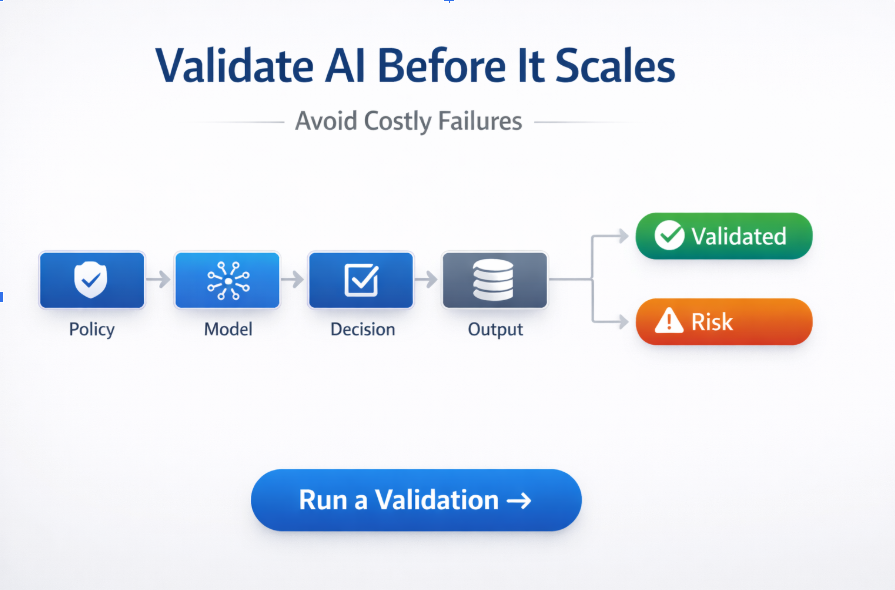
Introduction
Artificial Intelligence is powering the next wave of enterprise innovation—from intelligent automation to real-time decision-making. But as AI adoption accelerates, so do the risks hidden inside development pipelines.
Most organizations still validate AI systems too late—often after deployment. By then, vulnerabilities like prompt injection, data leakage, and model manipulation are already embedded into production workflows.
This is why forward-thinking teams are shifting left and choosing to test AI workflow early—making security a core part of development instead of an afterthought.
At the center of this transformation is AI code scanning, enabling teams to identify and fix risks before they scale.
Why Traditional Security Doesn’t Work for AI Workflows
Traditional security tools were built for deterministic systems. AI systems operate very differently—and that’s where the gap begins.
How AI Systems Are Different
- AI systems rely on data, not just code
- Outputs are non-deterministic and context-driven
- Behavior evolves with inputs and training
- Risk spans prompts, models, and pipelines
Common Risks in AI Workflows
- Prompt injection attacks
- Sensitive data leakage
- Model drift and instability
- Third-party model dependencies
Traditional tools cannot effectively test AI workflow behavior, because they lack visibility into how AI systems think, respond, and evolve.
What It Means to Test AI Workflow
To truly secure AI systems, organizations must go beyond static code checks and start validating the entire AI lifecycle.
Testing AI Workflows Includes:
- Prompt logic and input handling
- Model configurations and guardrails
- Training and fine-tuning datasets
- API integrations and external models
- Output behavior and response patterns
Traditional vs AI Workflow Testing
Traditional Testing
Test AI Workflow
Code-level checks
End-to-end AI validation
Static analysis
Context-aware analysis
Limited scope
Full AI lifecycle coverage
Known vulnerabilities
Dynamic behavior & risk detection
By choosing to test AI workflow continuously, organizations can proactively detect risks before they impact users or business operations.
Top AI Security Risks in Development Workflows
1. Prompt Injection Attacks
Malicious inputs can override system instructions, leading to unsafe or manipulated outputs.
2. Data Leakage
AI models may unintentionally expose:
- Personally identifiable information (PII)
- Sensitive enterprise data
- Training dataset artifacts
3. Model Misconfiguration
Poor setup can result in:
- Weak guardrails
- Uncontrolled outputs
- Expanded attack surfaces
4. Third-Party Dependencies
External models and APIs introduce:
- Supply chain risks
- Limited transparency
- Unknown vulnerabilities
5. Lack of Governance
Without structured validation:
- Compliance risks increase
- Audit readiness declines
How AI Code Scanning Helps Test AI Workflow
AI code scanning plays a critical role in enabling teams to test AI workflow at every stage of development.
Core Capabilities
- Automated security validation during development
- Real-time detection of AI-specific vulnerabilities
- Policy enforcement before deployment
- Continuous monitoring after release
Shift-Left Advantage
- Catch issues earlier in the lifecycle
- Reduce remediation costs
- Accelerate deployment timelines
Instead of one-time testing, organizations can continuously test AI workflow behavior, ensuring systems remain secure as they evolve.
Built on Trusted AI Security Frameworks
Testing AI workflows effectively requires alignment with global standards.
OWASP Top 10 for LLMs
Detects:
- Prompt injection vulnerabilities
- Sensitive data exposure
- Unsafe output handling
NIST AI Risk Management Framework
Supports:
- Risk identification
- Continuous monitoring
- AI governance
MITRE ATLAS
Enables:
- Adversarial attack simulation
- Threat modeling
- Improved resilience
EU AI Act Readiness
Helps:
- Classify AI risk levels
- Ensure transparency
- Prepare for compliance
ISO/IEC 42001
Provides:
- Standardized AI governance
- Risk management frameworks
- Responsible AI practices
Benefits of Testing AI Workflow Early
💰 Reduced Costs
Fix vulnerabilities during development instead of post-deployment.
⚡ Faster Time-to-Market
Avoid last-minute security delays.
📜 Stronger Compliance
Stay aligned with global regulations from day one.
🤝 Increased Trust
Build confidence among users, stakeholders, and regulators.
How Trusys AI Enables You to Test AI Workflow
Trusys AI delivers a unified platform designed to secure AI systems from development to production.
🔍 Automated AI Workflow Testing
- Scan AI pipelines for vulnerabilities
- Detect prompt injection risks
- Analyze model behavior
🛡️ LLM Risk Detection
- Aligned with OWASP standards
- Real-time vulnerability insights
⚔️ Adversarial Testing
- Simulate real-world attacks
- Stress-test AI workflows
📊 Governance & Compliance
- Track risks across lifecycle
- Maintain audit readiness
- Support regulatory frameworks
🌍 Use Cases
- Banking & Finance: Prevent data leaks in AI advisors
- Healthcare: Ensure compliance in diagnostics
- Enterprise SaaS: Secure AI copilots and chatbots
Best Practices to Test AI Workflow Securely
✅ Integrate security early in development
✅ Continuously test AI workflow across pipelines
✅ Use adversarial testing to uncover hidden risks
✅ Secure data pipelines against leakage and poisoning
✅ Monitor AI systems in production
The Future of AI Workflow Testing
As AI adoption grows, testing and security will become inseparable.
What’s Next
- AI-native testing platforms
- Continuous AI assurance models
- Standardized compliance frameworks
Organizations that prioritize the ability to test AI workflow early and continuously will gain a competitive advantage in scalability, trust, and innovation.
Conclusion
AI is transforming industries—but without proactive validation, it also introduces critical risks.
The ability to test AI workflow early is no longer optional—it’s essential.
By embedding security into development workflows, organizations can:
- Build resilient AI systems
- Accelerate innovation
- Ensure compliance and trust
Ready to Test Your AI Workflow Before It Breaks?
Don’t wait for production failures to expose vulnerabilities.
Trusys AI helps you test AI workflow early, detect risks proactively, and deploy AI systems with confidence.
Stop guessing.
Start measuring.
Join teams building reliable AI with TruEval. Start with a free trial, no credit card required. Get your first evaluation running in under 10 minutes.
Questions about Trusys?
Our team is here to help. Schedule a personalized demo to see how Trusys fits your specific use case.
Book a Demo

Ready to dive in?
Check out our documentation and tutorials. Get started with example datasets and evaluation templates.
Start Free Trial
Free Trial
No credit card required
10 Min
To first evaluation
24/7
Enterprise support


Benefits
Specifications
How-to
Contact Us
Learn More

Test AI Workflow Early: Catching AI Security Risks Before They Scale
2026-04-08
Introduction
Artificial Intelligence is powering the next wave of enterprise innovation—from intelligent automation to real-time decision-making. But as AI adoption accelerates, so do the risks hidden inside development pipelines.
Most organizations still validate AI systems too late—often after deployment. By then, vulnerabilities like prompt injection, data leakage, and model manipulation are already embedded into production workflows.
This is why forward-thinking teams are shifting left and choosing to test AI workflow early—making security a core part of development instead of an afterthought.
At the center of this transformation is AI code scanning, enabling teams to identify and fix risks before they scale.
Why Traditional Security Doesn’t Work for AI Workflows
Traditional security tools were built for deterministic systems. AI systems operate very differently—and that’s where the gap begins.
How AI Systems Are Different
- AI systems rely on data, not just code
- Outputs are non-deterministic and context-driven
- Behavior evolves with inputs and training
- Risk spans prompts, models, and pipelines
Common Risks in AI Workflows
- Prompt injection attacks
- Sensitive data leakage
- Model drift and instability
- Third-party model dependencies
Traditional tools cannot effectively test AI workflow behavior, because they lack visibility into how AI systems think, respond, and evolve.
What It Means to Test AI Workflow
To truly secure AI systems, organizations must go beyond static code checks and start validating the entire AI lifecycle.
Testing AI Workflows Includes:
- Prompt logic and input handling
- Model configurations and guardrails
- Training and fine-tuning datasets
- API integrations and external models
- Output behavior and response patterns
Traditional vs AI Workflow Testing
Traditional Testing
Test AI Workflow
Code-level checks
End-to-end AI validation
Static analysis
Context-aware analysis
Limited scope
Full AI lifecycle coverage
Known vulnerabilities
Dynamic behavior & risk detection
By choosing to test AI workflow continuously, organizations can proactively detect risks before they impact users or business operations.
Top AI Security Risks in Development Workflows
1. Prompt Injection Attacks
Malicious inputs can override system instructions, leading to unsafe or manipulated outputs.
2. Data Leakage
AI models may unintentionally expose:
- Personally identifiable information (PII)
- Sensitive enterprise data
- Training dataset artifacts
3. Model Misconfiguration
Poor setup can result in:
- Weak guardrails
- Uncontrolled outputs
- Expanded attack surfaces
4. Third-Party Dependencies
External models and APIs introduce:
- Supply chain risks
- Limited transparency
- Unknown vulnerabilities
5. Lack of Governance
Without structured validation:
- Compliance risks increase
- Audit readiness declines
How AI Code Scanning Helps Test AI Workflow
AI code scanning plays a critical role in enabling teams to test AI workflow at every stage of development.
Core Capabilities
- Automated security validation during development
- Real-time detection of AI-specific vulnerabilities
- Policy enforcement before deployment
- Continuous monitoring after release
Shift-Left Advantage
- Catch issues earlier in the lifecycle
- Reduce remediation costs
- Accelerate deployment timelines
Instead of one-time testing, organizations can continuously test AI workflow behavior, ensuring systems remain secure as they evolve.
Built on Trusted AI Security Frameworks
Testing AI workflows effectively requires alignment with global standards.
OWASP Top 10 for LLMs
Detects:
- Prompt injection vulnerabilities
- Sensitive data exposure
- Unsafe output handling
NIST AI Risk Management Framework
Supports:
- Risk identification
- Continuous monitoring
- AI governance
MITRE ATLAS
Enables:
- Adversarial attack simulation
- Threat modeling
- Improved resilience
EU AI Act Readiness
Helps:
- Classify AI risk levels
- Ensure transparency
- Prepare for compliance
ISO/IEC 42001
Provides:
- Standardized AI governance
- Risk management frameworks
- Responsible AI practices
Benefits of Testing AI Workflow Early
💰 Reduced Costs
Fix vulnerabilities during development instead of post-deployment.
⚡ Faster Time-to-Market
Avoid last-minute security delays.
📜 Stronger Compliance
Stay aligned with global regulations from day one.
🤝 Increased Trust
Build confidence among users, stakeholders, and regulators.
How Trusys AI Enables You to Test AI Workflow
Trusys AI delivers a unified platform designed to secure AI systems from development to production.
🔍 Automated AI Workflow Testing
- Scan AI pipelines for vulnerabilities
- Detect prompt injection risks
- Analyze model behavior
🛡️ LLM Risk Detection
- Aligned with OWASP standards
- Real-time vulnerability insights
⚔️ Adversarial Testing
- Simulate real-world attacks
- Stress-test AI workflows
📊 Governance & Compliance
- Track risks across lifecycle
- Maintain audit readiness
- Support regulatory frameworks
🌍 Use Cases
- Banking & Finance: Prevent data leaks in AI advisors
- Healthcare: Ensure compliance in diagnostics
- Enterprise SaaS: Secure AI copilots and chatbots
Best Practices to Test AI Workflow Securely
✅ Integrate security early in development
✅ Continuously test AI workflow across pipelines
✅ Use adversarial testing to uncover hidden risks
✅ Secure data pipelines against leakage and poisoning
✅ Monitor AI systems in production
The Future of AI Workflow Testing
As AI adoption grows, testing and security will become inseparable.
What’s Next
- AI-native testing platforms
- Continuous AI assurance models
- Standardized compliance frameworks
Organizations that prioritize the ability to test AI workflow early and continuously will gain a competitive advantage in scalability, trust, and innovation.
Conclusion
AI is transforming industries—but without proactive validation, it also introduces critical risks.
The ability to test AI workflow early is no longer optional—it’s essential.
By embedding security into development workflows, organizations can:
- Build resilient AI systems
- Accelerate innovation
- Ensure compliance and trust
Ready to Test Your AI Workflow Before It Breaks?
Don’t wait for production failures to expose vulnerabilities.
Trusys AI helps you test AI workflow early, detect risks proactively, and deploy AI systems with confidence.
Stop guessing.
Start measuring.
Join teams building reliable AI with TruEval. Start with a free trial, no credit card required. Get your first evaluation running in under 10 minutes.
Questions about Trusys?
Our team is here to help. Schedule a personalized demo to see how Trusys fits your specific use case.
Book a Demo
Ready to dive in?
Check out our documentation and tutorials. Get started with example datasets and evaluation templates.
Start Free Trial
Free Trial
No credit card required
10 Min
To first evaluation
24/7
Enterprise support
Test AI Workflow Early: Catching AI Security Risks Before They Scale
2026-04-08
Introduction
Artificial Intelligence is powering the next wave of enterprise innovation—from intelligent automation to real-time decision-making. But as AI adoption accelerates, so do the risks hidden inside development pipelines.
Most organizations still validate AI systems too late—often after deployment. By then, vulnerabilities like prompt injection, data leakage, and model manipulation are already embedded into production workflows.
This is why forward-thinking teams are shifting left and choosing to test AI workflow early—making security a core part of development instead of an afterthought.
At the center of this transformation is AI code scanning, enabling teams to identify and fix risks before they scale.
Why Traditional Security Doesn’t Work for AI Workflows
Traditional security tools were built for deterministic systems. AI systems operate very differently—and that’s where the gap begins.
How AI Systems Are Different
- AI systems rely on data, not just code
- Outputs are non-deterministic and context-driven
- Behavior evolves with inputs and training
- Risk spans prompts, models, and pipelines
Common Risks in AI Workflows
- Prompt injection attacks
- Sensitive data leakage
- Model drift and instability
- Third-party model dependencies
Traditional tools cannot effectively test AI workflow behavior, because they lack visibility into how AI systems think, respond, and evolve.
What It Means to Test AI Workflow
To truly secure AI systems, organizations must go beyond static code checks and start validating the entire AI lifecycle.
Testing AI Workflows Includes:
- Prompt logic and input handling
- Model configurations and guardrails
- Training and fine-tuning datasets
- API integrations and external models
- Output behavior and response patterns
Traditional vs AI Workflow Testing
Traditional Testing
Test AI Workflow
Code-level checks
End-to-end AI validation
Static analysis
Context-aware analysis
Limited scope
Full AI lifecycle coverage
Known vulnerabilities
Dynamic behavior & risk detection
By choosing to test AI workflow continuously, organizations can proactively detect risks before they impact users or business operations.
Top AI Security Risks in Development Workflows
1. Prompt Injection Attacks
Malicious inputs can override system instructions, leading to unsafe or manipulated outputs.
2. Data Leakage
AI models may unintentionally expose:
- Personally identifiable information (PII)
- Sensitive enterprise data
- Training dataset artifacts
3. Model Misconfiguration
Poor setup can result in:
- Weak guardrails
- Uncontrolled outputs
- Expanded attack surfaces
4. Third-Party Dependencies
External models and APIs introduce:
- Supply chain risks
- Limited transparency
- Unknown vulnerabilities
5. Lack of Governance
Without structured validation:
- Compliance risks increase
- Audit readiness declines
How AI Code Scanning Helps Test AI Workflow
AI code scanning plays a critical role in enabling teams to test AI workflow at every stage of development.
Core Capabilities
- Automated security validation during development
- Real-time detection of AI-specific vulnerabilities
- Policy enforcement before deployment
- Continuous monitoring after release
Shift-Left Advantage
- Catch issues earlier in the lifecycle
- Reduce remediation costs
- Accelerate deployment timelines
Instead of one-time testing, organizations can continuously test AI workflow behavior, ensuring systems remain secure as they evolve.
Built on Trusted AI Security Frameworks
Testing AI workflows effectively requires alignment with global standards.
OWASP Top 10 for LLMs
Detects:
- Prompt injection vulnerabilities
- Sensitive data exposure
- Unsafe output handling
NIST AI Risk Management Framework
Supports:
- Risk identification
- Continuous monitoring
- AI governance
MITRE ATLAS
Enables:
- Adversarial attack simulation
- Threat modeling
- Improved resilience
EU AI Act Readiness
Helps:
- Classify AI risk levels
- Ensure transparency
- Prepare for compliance
ISO/IEC 42001
Provides:
- Standardized AI governance
- Risk management frameworks
- Responsible AI practices
Benefits of Testing AI Workflow Early
💰 Reduced Costs
Fix vulnerabilities during development instead of post-deployment.
⚡ Faster Time-to-Market
Avoid last-minute security delays.
📜 Stronger Compliance
Stay aligned with global regulations from day one.
🤝 Increased Trust
Build confidence among users, stakeholders, and regulators.
How Trusys AI Enables You to Test AI Workflow
Trusys AI delivers a unified platform designed to secure AI systems from development to production.
🔍 Automated AI Workflow Testing
- Scan AI pipelines for vulnerabilities
- Detect prompt injection risks
- Analyze model behavior
🛡️ LLM Risk Detection
- Aligned with OWASP standards
- Real-time vulnerability insights
⚔️ Adversarial Testing
- Simulate real-world attacks
- Stress-test AI workflows
📊 Governance & Compliance
- Track risks across lifecycle
- Maintain audit readiness
- Support regulatory frameworks
🌍 Use Cases
- Banking & Finance: Prevent data leaks in AI advisors
- Healthcare: Ensure compliance in diagnostics
- Enterprise SaaS: Secure AI copilots and chatbots
Best Practices to Test AI Workflow Securely
✅ Integrate security early in development
✅ Continuously test AI workflow across pipelines
✅ Use adversarial testing to uncover hidden risks
✅ Secure data pipelines against leakage and poisoning
✅ Monitor AI systems in production
The Future of AI Workflow Testing
As AI adoption grows, testing and security will become inseparable.
What’s Next
- AI-native testing platforms
- Continuous AI assurance models
- Standardized compliance frameworks
Organizations that prioritize the ability to test AI workflow early and continuously will gain a competitive advantage in scalability, trust, and innovation.
Conclusion
AI is transforming industries—but without proactive validation, it also introduces critical risks.
The ability to test AI workflow early is no longer optional—it’s essential.
By embedding security into development workflows, organizations can:
- Build resilient AI systems
- Accelerate innovation
- Ensure compliance and trust
Ready to Test Your AI Workflow Before It Breaks?
Don’t wait for production failures to expose vulnerabilities.
Trusys AI helps you test AI workflow early, detect risks proactively, and deploy AI systems with confidence.
Stop guessing.
Start measuring.
Join teams building reliable AI with Trusys. Start with a free trial, no credit card required. Get your first evaluation running in under 10 minutes.
Questions about Trusys?
Our team is here to help. Schedule a personalized demo to see how Trusys fits your specific use case.
Book a Demo

Ready to dive in?
Check out our documentation and tutorials. Get started with example datasets and evaluation templates.
Start Free Trial
Free Trial
No credit card required
10 Min
to get started
24/7
Enterprise support