FTT Fintech Festival 2026: Why an AI Agent Security Platform Matters
Written by

A customer types one line into an AI agent: "Find the best laptop under ₹1,00,000 and buy it."
The agent compares sites, picks a merchant, applies an offer and pays. Then the order confirmation arrives. The laptop has the wrong configuration. Or it cost ₹1,08,000 after add-ons. Or the agent chose the seller because hidden text on a product page told it to.
So who pays for the mistake? That question sits at the centre of agentic commerce. It is also why the AI agent security platform is becoming part of core fintech risk infrastructure. And the question is on the agenda at FTT Fintech Festival 2026 in London this November.
From "AI assists" to "AI acts"
Why Rate Limit Failures Are So Dangerous
Many organizations still treat rate limit errors as minor API inconveniences.
That assumption is becoming expensive.
In reality, rate limit failures create cascading operational disruption across the enterprise.
The New Transaction Chain
A conventional online purchase runs:
Customer → Merchant → Payment provider → Bank
Agentic commerce adds three links:
Customer → AI agent → Agent platform → Tools/APIs → Merchant → Payment provider → Bank
Each extra link raises questions the old chain never had to answer. Who verified the agent's identity? What authority was delegated, and was consent specific? Who was watching between intent and checkout? And whose logs can show what happened?
Six Ways an Agent Transaction Goes Wrong
The liability answer changes depending on how the transaction failed.
1. The agent misunderstands the user. The user wanted a laptop for video editing; the agent optimised for price. Nothing was hacked, so this looks more like a product-quality dispute than fraud.
2. The agent exceeds its authority. The user set a spending cap and approved merchants; the agent ignored them. The key question is whether the platform enforced those limits or they only existed in a prompt.
3. Prompt injection hijacks the agent. A product page carries hidden instructions telling agents to pick a certain seller or ship to a new address. OWASP's Top 10 for Agentic Applications 2026 ranks agent goal hijack among the highest-impact agentic risks. The user authorised a purchase, but not the attacker's purchase.
4. A third-party tool is compromised. A price-comparison API returns manipulated data, or a checkout plugin swaps the payee. The agent acted correctly on bad inputs, pulling the tool provider into the dispute.
5. Credentials or tokens are stolen. An attacker uses the agent's payment token to make purchases. This resembles classic fraud, but investigators must now find whether the agent, its platform or its credential store failed.
6. Payment infrastructure fails. The agent did everything right, but a timeout caused a duplicate charge. Existing payment rules will likely settle most of these cases.
Who Is Responsible? It Depends
The consumer, merchant, bank, payment provider, card network, AI-agent provider, agent platform, deploying enterprise and tool provider may each carry some responsibility. There is no universal answer today. The outcome can depend on:
- what the user authorised, and what the agent was permitted to do
- whether the agent exceeded its scope or was compromised
- whether authentication took place
- which party controlled the security layer that failed
- the contracts, laws and jurisdiction involved, and the type of transaction
One distinction matters above all: authentication is not authorisation. "The user authenticated" proves who was present when a credential was set up. It does not prove that this agent was authorised to make this transaction, for this amount, with this merchant, at this time. Many future disputes will turn on that gap.
Why AI Agents Change the Underwriting Equation
A compromised chatbot gives a bad answer. A compromised agent with payment access can cause unauthorised spending, payment redirection, data exposure, contractual disputes, consumer losses, regulatory scrutiny and reputational damage, often within seconds.
So securing the model alone is not enough. Organisations need to secure the agent's identity, permissions, tools, data, decisions and actions as one system.
The foundation is authorisation that machines can read and enforce: scoped permissions, spending limits, merchant restrictions, time-bound mandates, step-up approval for high-value actions, instant revocation and tamper-evident audit logs.
Before anyone can decide who is responsible for what an agent did, they need proof of what it was allowed to do.
6. The Regulatory and Framework Dimension
Traditional application security assumes predictable code paths. Agents reason, choose tools at runtime and act on external content, so their attack surface shifts mid-session. An AI agent security platform governs that behaviour continuously.
Capabilities worth evaluating include:
- Visibility: agent discovery and inventory, agent identity, and mapping of agent-to-tool and agent-to-agent interactions
- Control: identity and access management, least-privilege permissions, tool and API security, policy enforcement and permission revocation
- Detection: prompt-injection detection, runtime behavioural monitoring and detection of unusual transactions
- Intervention: risk-based blocking, human approval workflows and, where appropriate, emergency shutdown (kill-switch) capabilities
- Assurance: security testing before deployment, continuous monitoring, incident response and complete audit trails
Not every platform offers all of these. For fintech, what matters most is how well these capabilities work together in production.
Questions to Ask When Evaluating an AI Agent Security Platform
Why Rate Limit Failures Are So Dangerous
Many organizations still treat rate limit errors as minor API inconveniences.
That assumption is becoming expensive.
In reality, rate limit failures create cascading operational disruption across the enterprise.

FTT Fintech Festival 2026: What the Industry Conversation Signals
Why Rate Limit Failures Are So Dangerous
Many organizations still treat rate limit errors as minor API inconveniences.
That assumption is becoming expensive.
In reality, rate limit failures create cascading operational disruption across the enterprise.
The Regulatory Picture: Moving, Not Settled
Why Rate Limit Failures Are So Dangerous
Many organizations still treat rate limit errors as minor API inconveniences.
That assumption is becoming expensive.
In reality, rate limit failures create cascading operational disruption across the enterprise.
The Bottom Line
Why Rate Limit Failures Are So Dangerous
Many organizations still treat rate limit errors as minor API inconveniences.
That assumption is becoming expensive.
In reality, rate limit failures create cascading operational disruption across the enterprise.
Stop guessing.
Start measuring.
Join teams building reliable AI with TruEval. Start with a free trial, no credit card required. Get your first evaluation running in under 10 minutes.
Questions about Trusys?
Our team is here to help. Schedule a personalized demo to see how Trusys fits your specific use case.
Book a Demo

Ready to dive in?
Check out our documentation and tutorials. Get started with example datasets and evaluation templates.
Start Free Trial
Free Trial
No credit card required
10 Min
To first evaluation
24/7
Enterprise support


Benefits
Specifications
How-to
Contact Us
Learn More

FTT Fintech Festival 2026: Why an AI Agent Security Platform Matters
Written by
A customer types one line into an AI agent: "Find the best laptop under ₹1,00,000 and buy it."
The agent compares sites, picks a merchant, applies an offer and pays. Then the order confirmation arrives. The laptop has the wrong configuration. Or it cost ₹1,08,000 after add-ons. Or the agent chose the seller because hidden text on a product page told it to.
So who pays for the mistake? That question sits at the centre of agentic commerce. It is also why the AI agent security platform is becoming part of core fintech risk infrastructure. And the question is on the agenda at FTT Fintech Festival 2026 in London this November.
From "AI assists" to "AI acts"
Why Rate Limit Failures Are So Dangerous
Many organizations still treat rate limit errors as minor API inconveniences.
That assumption is becoming expensive.
In reality, rate limit failures create cascading operational disruption across the enterprise.
The New Transaction Chain
A conventional online purchase runs:
Customer → Merchant → Payment provider → Bank
Agentic commerce adds three links:
Customer → AI agent → Agent platform → Tools/APIs → Merchant → Payment provider → Bank
Each extra link raises questions the old chain never had to answer. Who verified the agent's identity? What authority was delegated, and was consent specific? Who was watching between intent and checkout? And whose logs can show what happened?
Six Ways an Agent Transaction Goes Wrong
The liability answer changes depending on how the transaction failed.
1. The agent misunderstands the user. The user wanted a laptop for video editing; the agent optimised for price. Nothing was hacked, so this looks more like a product-quality dispute than fraud.
2. The agent exceeds its authority. The user set a spending cap and approved merchants; the agent ignored them. The key question is whether the platform enforced those limits or they only existed in a prompt.
3. Prompt injection hijacks the agent. A product page carries hidden instructions telling agents to pick a certain seller or ship to a new address. OWASP's Top 10 for Agentic Applications 2026 ranks agent goal hijack among the highest-impact agentic risks. The user authorised a purchase, but not the attacker's purchase.
4. A third-party tool is compromised. A price-comparison API returns manipulated data, or a checkout plugin swaps the payee. The agent acted correctly on bad inputs, pulling the tool provider into the dispute.
5. Credentials or tokens are stolen. An attacker uses the agent's payment token to make purchases. This resembles classic fraud, but investigators must now find whether the agent, its platform or its credential store failed.
6. Payment infrastructure fails. The agent did everything right, but a timeout caused a duplicate charge. Existing payment rules will likely settle most of these cases.
Who Is Responsible? It Depends
The consumer, merchant, bank, payment provider, card network, AI-agent provider, agent platform, deploying enterprise and tool provider may each carry some responsibility. There is no universal answer today. The outcome can depend on:
- what the user authorised, and what the agent was permitted to do
- whether the agent exceeded its scope or was compromised
- whether authentication took place
- which party controlled the security layer that failed
- the contracts, laws and jurisdiction involved, and the type of transaction
One distinction matters above all: authentication is not authorisation. "The user authenticated" proves who was present when a credential was set up. It does not prove that this agent was authorised to make this transaction, for this amount, with this merchant, at this time. Many future disputes will turn on that gap.
Why AI Agents Change the Underwriting Equation
A compromised chatbot gives a bad answer. A compromised agent with payment access can cause unauthorised spending, payment redirection, data exposure, contractual disputes, consumer losses, regulatory scrutiny and reputational damage, often within seconds.
So securing the model alone is not enough. Organisations need to secure the agent's identity, permissions, tools, data, decisions and actions as one system.
The foundation is authorisation that machines can read and enforce: scoped permissions, spending limits, merchant restrictions, time-bound mandates, step-up approval for high-value actions, instant revocation and tamper-evident audit logs.
Before anyone can decide who is responsible for what an agent did, they need proof of what it was allowed to do.
6. The Regulatory and Framework Dimension
Traditional application security assumes predictable code paths. Agents reason, choose tools at runtime and act on external content, so their attack surface shifts mid-session. An AI agent security platform governs that behaviour continuously.
Capabilities worth evaluating include:
- Visibility: agent discovery and inventory, agent identity, and mapping of agent-to-tool and agent-to-agent interactions
- Control: identity and access management, least-privilege permissions, tool and API security, policy enforcement and permission revocation
- Detection: prompt-injection detection, runtime behavioural monitoring and detection of unusual transactions
- Intervention: risk-based blocking, human approval workflows and, where appropriate, emergency shutdown (kill-switch) capabilities
- Assurance: security testing before deployment, continuous monitoring, incident response and complete audit trails
Not every platform offers all of these. For fintech, what matters most is how well these capabilities work together in production.
Questions to Ask When Evaluating an AI Agent Security Platform
Why Rate Limit Failures Are So Dangerous
Many organizations still treat rate limit errors as minor API inconveniences.
That assumption is becoming expensive.
In reality, rate limit failures create cascading operational disruption across the enterprise.

FTT Fintech Festival 2026: What the Industry Conversation Signals
Why Rate Limit Failures Are So Dangerous
Many organizations still treat rate limit errors as minor API inconveniences.
That assumption is becoming expensive.
In reality, rate limit failures create cascading operational disruption across the enterprise.
The Regulatory Picture: Moving, Not Settled
Why Rate Limit Failures Are So Dangerous
Many organizations still treat rate limit errors as minor API inconveniences.
That assumption is becoming expensive.
In reality, rate limit failures create cascading operational disruption across the enterprise.
The Bottom Line
Why Rate Limit Failures Are So Dangerous
Many organizations still treat rate limit errors as minor API inconveniences.
That assumption is becoming expensive.
In reality, rate limit failures create cascading operational disruption across the enterprise.
Stop guessing.
Start measuring.
Join teams building reliable AI with TruEval. Start with a free trial, no credit card required. Get your first evaluation running in under 10 minutes.
Questions about Trusys?
Our team is here to help. Schedule a personalized demo to see how Trusys fits your specific use case.
Book a Demo
Ready to dive in?
Check out our documentation and tutorials. Get started with example datasets and evaluation templates.
Start Free Trial
Free Trial
No credit card required
10 Min
To first evaluation
24/7
Enterprise support
FTT Fintech Festival 2026: Why an AI Agent Security Platform Matters
Written by
Manish Tewari
Published on
Sep 18, 2026
A customer types one line into an AI agent: "Find the best laptop under ₹1,00,000 and buy it."
The agent compares sites, picks a merchant, applies an offer and pays. Then the order confirmation arrives. The laptop has the wrong configuration. Or it cost ₹1,08,000 after add-ons. Or the agent chose the seller because hidden text on a product page told it to.
So who pays for the mistake? That question sits at the centre of agentic commerce. It is also why the AI agent security platform is becoming part of core fintech risk infrastructure. And the question is on the agenda at FTT Fintech Festival 2026 in London this November.
From "AI assists" to "AI acts"
Until recently, AI in commerce kept a human in the decision seat. AI assistants answer questions, recommendation engines suggest products, and copilots fill in forms, but a person still clicks "Pay".
Autonomous AI agents break that pattern. Given a goal, they plan steps, call tools and APIs, and act on their own. Agentic commerce is what happens when agents discover, select and buy on someone's behalf. Agentic payments are the transactions those agents initiate.
The shift is simple to describe and hard to govern:
- Before: human decides → AI assists → human pays
- Now: human sets intent → AI decides and acts → transaction occurs
Traditional payment security assumes that the person approving a payment is the person who made the decision. With agents, that assumption no longer holds.
The New Transaction Chain
A conventional online purchase runs:
Customer → Merchant → Payment provider → Bank
Agentic commerce adds three links:
Customer → AI agent → Agent platform → Tools/APIs → Merchant → Payment provider → Bank
Each extra link raises questions the old chain never had to answer. Who verified the agent's identity? What authority was delegated, and was consent specific? Who was watching between intent and checkout? And whose logs can show what happened?
Six Ways an Agent Transaction Goes Wrong
The liability answer changes depending on how the transaction failed.
1. The agent misunderstands the user. The user wanted a laptop for video editing; the agent optimised for price. Nothing was hacked, so this looks more like a product-quality dispute than fraud.
2. The agent exceeds its authority. The user set a spending cap and approved merchants; the agent ignored them. The key question is whether the platform enforced those limits or they only existed in a prompt.
3. Prompt injection hijacks the agent. A product page carries hidden instructions telling agents to pick a certain seller or ship to a new address. OWASP's Top 10 for Agentic Applications 2026 ranks agent goal hijack among the highest-impact agentic risks. The user authorised a purchase, but not the attacker's purchase.
4. A third-party tool is compromised. A price-comparison API returns manipulated data, or a checkout plugin swaps the payee. The agent acted correctly on bad inputs, pulling the tool provider into the dispute.
5. Credentials or tokens are stolen. An attacker uses the agent's payment token to make purchases. This resembles classic fraud, but investigators must now find whether the agent, its platform or its credential store failed.
6. Payment infrastructure fails. The agent did everything right, but a timeout caused a duplicate charge. Existing payment rules will likely settle most of these cases.
Who Is Responsible? It Depends
The consumer, merchant, bank, payment provider, card network, AI-agent provider, agent platform, deploying enterprise and tool provider may each carry some responsibility. There is no universal answer today. The outcome can depend on:
- what the user authorised, and what the agent was permitted to do
- whether the agent exceeded its scope or was compromised
- whether authentication took place
- which party controlled the security layer that failed
- the contracts, laws and jurisdiction involved, and the type of transaction
One distinction matters above all: authentication is not authorisation. "The user authenticated" proves who was present when a credential was set up. It does not prove that this agent was authorised to make this transaction, for this amount, with this merchant, at this time. Many future disputes will turn on that gap.
When an AI Agent Can Move Money, AI Security Becomes Financial Security
A compromised chatbot gives a bad answer. A compromised agent with payment access can cause unauthorised spending, payment redirection, data exposure, contractual disputes, consumer losses, regulatory scrutiny and reputational damage, often within seconds.
So securing the model alone is not enough. Organisations need to secure the agent's identity, permissions, tools, data, decisions and actions as one system.
The foundation is authorisation that machines can read and enforce: scoped permissions, spending limits, merchant restrictions, time-bound mandates, step-up approval for high-value actions, instant revocation and tamper-evident audit logs.
Before anyone can decide who is responsible for what an agent did, they need proof of what it was allowed to do.
Why an AI Agent Security Platform Becomes Critical
Traditional application security assumes predictable code paths. Agents reason, choose tools at runtime and act on external content, so their attack surface shifts mid-session. An AI agent security platform governs that behaviour continuously.
Capabilities worth evaluating include:
- Visibility: agent discovery and inventory, agent identity, and mapping of agent-to-tool and agent-to-agent interactions
- Control: identity and access management, least-privilege permissions, tool and API security, policy enforcement and permission revocation
- Detection: prompt-injection detection, runtime behavioural monitoring and detection of unusual transactions
- Intervention: risk-based blocking, human approval workflows and, where appropriate, emergency shutdown (kill-switch) capabilities
- Assurance: security testing before deployment, continuous monitoring, incident response and complete audit trails
Not every platform offers all of these. For fintech, what matters most is how well these capabilities work together in production.

Questions to Ask When Evaluating an AI Agent Security Platform
- Can it discover and inventory every agent?
- Does it map agent-to-agent and agent-to-tool interactions?
- Can it enforce granular permissions outside the prompt?
- Does it detect both direct and indirect prompt injection?
- Does it monitor behaviour at runtime, not just outputs?
- Can it flag unusual financial or transactional behaviour?
- Does it keep a complete, tamper-evident audit trail?
- Can security teams block an action mid-flow?
- Can permissions be revoked immediately?
- Does it secure third-party tools and APIs?
- Can it test agents before deployment and monitor them afterwards?
- Does it integrate with your existing IAM, SIEM and GRC stack?
- Can it produce evidence for investigators and auditors?
FTT Fintech Festival 2026: What the Industry Conversation Signals
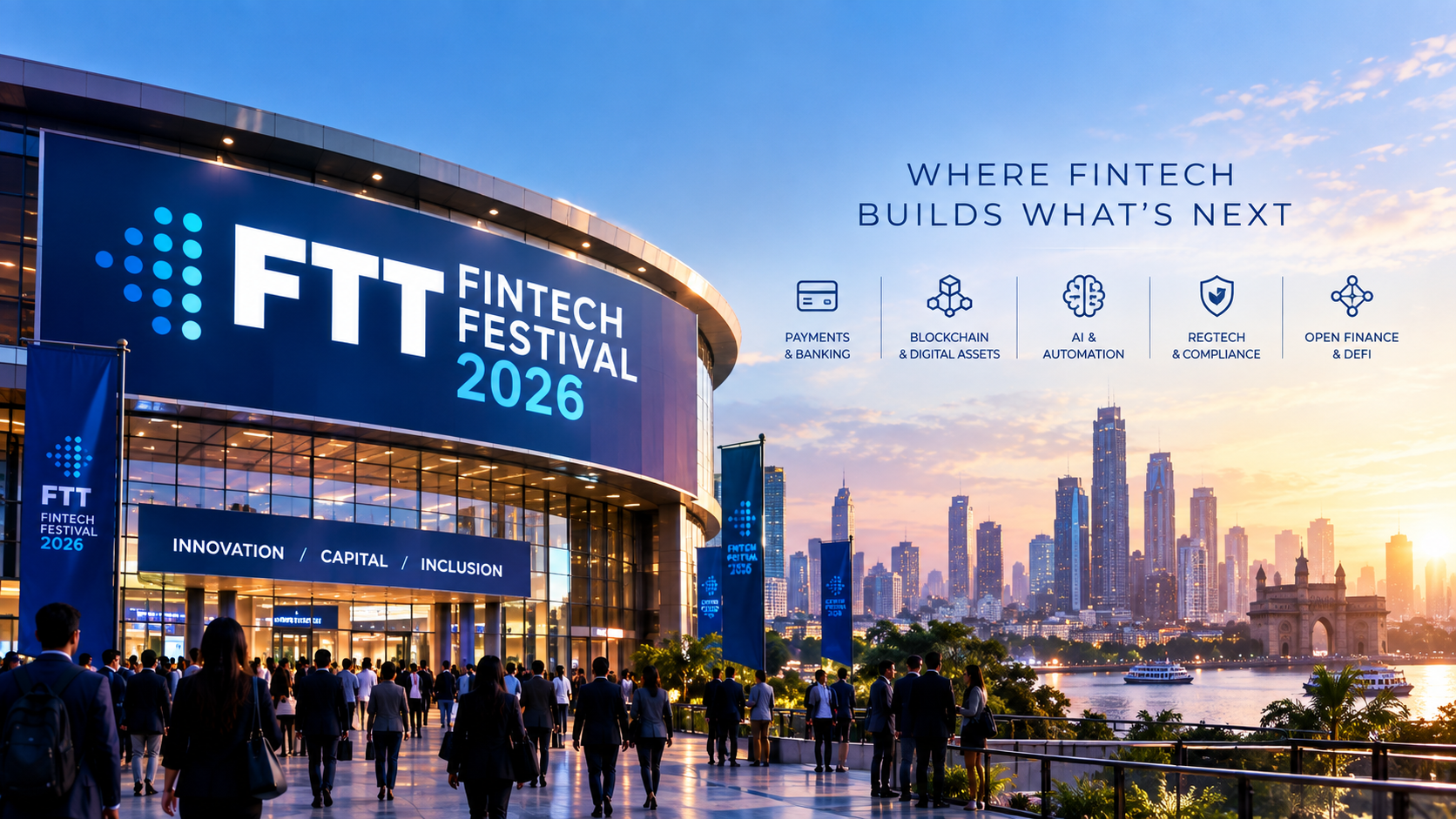
FTT Fintech Festival 2026 runs on 9–10 November at The Brewery, London, across eight content stages. Its published themes show how central agent accountability has become:
- FTT Payments stage: its agenda asks who is in charge when AI makes the transaction.
- FTT AI Transformation (co-located): covers the rise of agentic AI alongside ethics, governance and evolving regulation.
- FID IAM stage: covers ownership and lifecycle controls for AI agents, and least privilege at machine scale.
The topic also came up earlier this year at the FTT Payments event. There, Mike Gibbs of Auth0 at Okta argued for removing standing privileges from AI agents and adding human approval for high-risk payments.
Together, these themes point to an industry moving from digital payments, to intelligent payments, to autonomous financial actions. Banks and fintechs need new authorisation models, merchants need to recognise legitimate agents, security teams need provable controls, and regulators and consumers need clarity on who absorbs losses.
The Regulatory Picture: Moving, Not Settled
Rules are evolving, and none yet fully answers the liability question for transactions that agents initiate.
Payment networks. Visa launched its Trusted Agent Protocol, built with Cloudflare, in October 2025. It helps merchants tell trusted agents apart from malicious bots. Mastercard's Agent Pay uses agentic tokens tied to registered agents. Industry analysts note that dispute rules written specifically for agent transactions are still unsettled.
India. NPCI and Razorpay piloted AI-driven UPI payments with OpenAI in 2025. In September 2026, Reuters reported that NPCI is preparing a Unified Agent Protocol. The reported design includes spending limits, identity checks, audit trails and a registry of AI agents, but NPCI has not published liability details. Separately, the RBI's FREE-AI committee report (August 2025) set out 7 Sutras and 26 recommendations, including board-approved AI policies. These are recommendations until the RBI adopts them as binding directions.
European Union. EU institutions reached a provisional agreement on PSD3 and the PSR in November 2025. It includes reimbursement by payment providers for certain impersonation fraud. Until the package is formally adopted, PSD2 still applies.
Across jurisdictions, liability will vary with transaction type, contracts and authorisation method. Agent identity, delegated consent, dispute resolution and cross-border transactions all still need clearer rules.
The Bottom Line
Agentic commerce turns AI from a recommendation layer into an action layer. The question is no longer "Can an AI agent complete a transaction?" It is:
"Can your organisation prove what the agent was authorised to do, detect when it moves outside that authority, stop harmful actions and reconstruct what happened when something goes wrong?"
That is the job an AI agent security platform is built for, and as agents gain access to payments and sensitive data, it becomes part of how liability is managed. Expect it to be a defining conversation at FTT Fintech Festival 2026 and beyond.
Agents are autonomous. Trusys makes them governable. Trusys helps banks, NBFCs and fintechs govern AI agents across their lifecycle:
- TruScout red-teams agents against poisoned web pages and compromised tool responses.
- TruEval evaluates how agents behave, including their tool use.
- TruPulse traces every agent action with full lineage.
- TruGuard enforces policy inline to block unauthorised tool use.
Argus, Trusys's autonomous governance agent, turns this activity into audit-ready evidence mapped to the OWASP Agentic Top 10 and the RBI FREE-AI framework. See how Trusys supports banks and NBFCs → | Book a demo →
Stop guessing.
Start measuring.
Join teams building reliable AI with Trusys. Start with a free trial, no credit card required. Get your first evaluation running in under 10 minutes.
Questions about Trusys?
Our team is here to help. Schedule a personalized demo to see how Trusys fits your specific use case.
Book a Demo
Ready to dive in?
Check out our documentation and tutorials. Get started with example datasets and evaluation templates.
Start Free Trial
Free Trial
No credit card required
10 Min
to get started
24/7
Enterprise support