AI Governance for Legal Teams: What to Know Before Approving an AI Agent
Written by

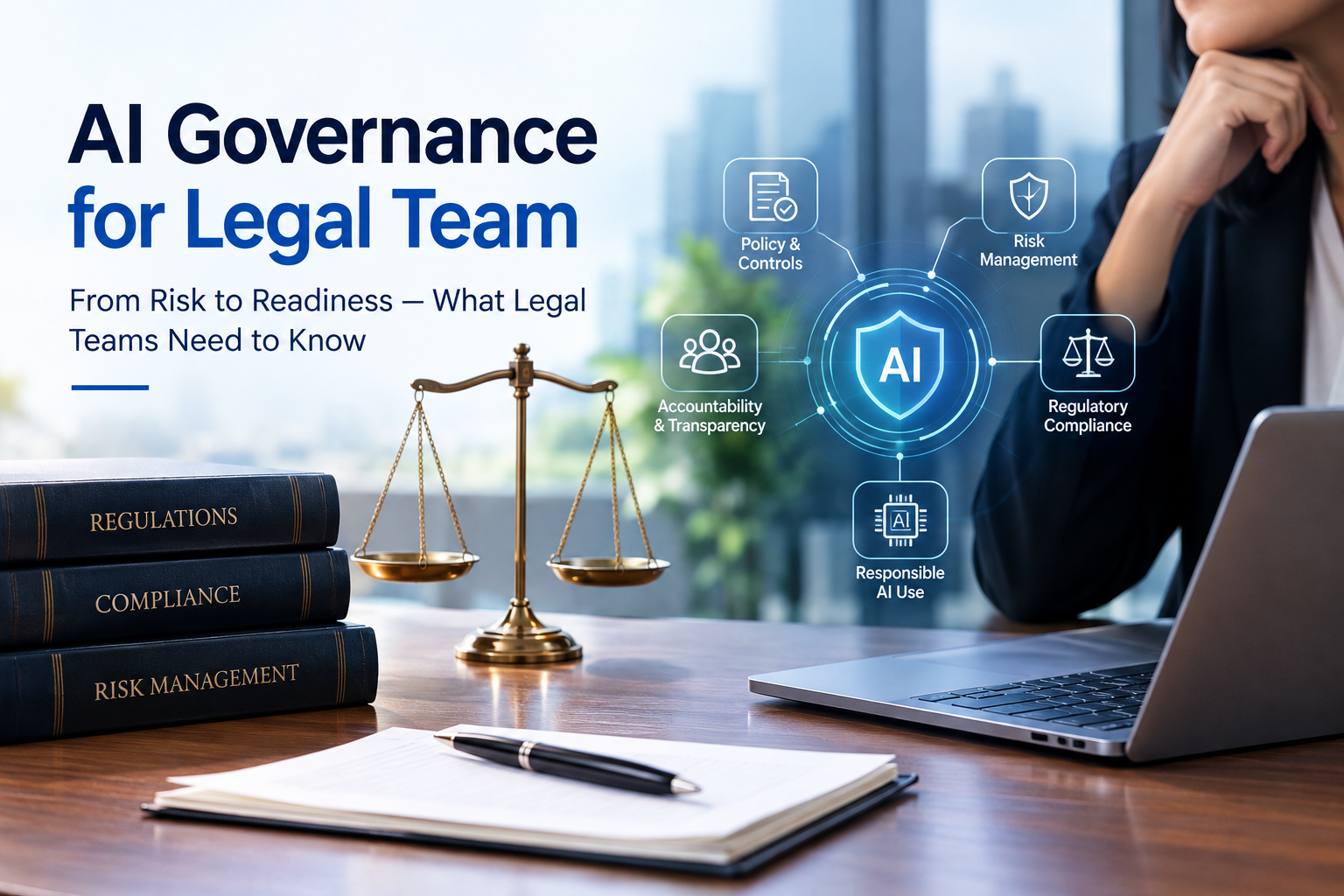
What Your Legal Team Needs to Know About AI Agents Before They Sign Off on Deployment
Why Rate Limit Failures Are So Dangerous
Many organizations still treat rate limit errors as minor API inconveniences.
That assumption is becoming expensive.
In reality, rate limit failures create cascading operational disruption across the enterprise.
AI Agents Change the Legal Governance Question
Security asks whether the system can be protected. Legal and Compliance have to ask a different question: should the organization authorize this system to perform this action, under what conditions, with what accountability, and with what evidence that those conditions were actually satisfied?
That distinction matters more than it sounds. A well-secured agent can still create serious legal exposure if nobody defined what it's allowed to do, who's responsible when it does something unexpected, or how the organization would demonstrate — to a regulator, a court, or a customer — that its use was reasonable and controlled. Security reduces the odds of the wrong thing happening. Legal governance decides what “wrong” means for this use case and what the organization is on the hook for if it happens anyway.
Your role here isn't to approve or reject AI in the abstract. It's to help set the conditions under which a particular use case can move forward responsibly — and to make sure those conditions are written down somewhere other than a Slack thread.
Why Legal Should Care About Agent Autonomy
Not every AI deployment needs the same level of scrutiny. A generative AI tool that drafts marketing copy for a human to review is a different animal than an agent that can independently query a database, call an external API, or send a message on the company's behalf.
It helps to think in terms of a spectrum:
• Generative AI / copilots — produce content or suggestions; a human decides what happens next.
• Workflow automation — executes a fixed, pre-approved sequence of steps with no judgment calls.
• AI agents — interpret an objective, choose among available actions, and execute with some degree of independent judgment.
• More autonomous agentic systems — chain multiple actions or tools together, sometimes across systems, with limited or delayed human checkpoints.
As autonomy increases, so does the number of legal questions that don't have obvious owners yet: Who authorized this specific action? What happens when the agent encounters a situation nobody anticipated? Is there a human who could reasonably have caught the error, or was the design such that no one could have? Legal review should scale with where a given use case sits on that spectrum — not with how impressive the underlying model is.
1. Define What the AI Agent Is Actually Authorized to Do
Before anything else, get a plain-language answer to a deceptively simple question: what can this agent actually do? Not what the vendor's marketing page says it can do — what it's actually configured and permissioned to do in your environment.
Work through this with IT and the business owner together:
• What systems and data sources can the agent access?
• Can it take actions with external effect — sending communications, initiating payments, modifying records, approving transactions?
• Can it produce outputs that a human is likely to accept without independent review?
• What actions are explicitly out of scope, and how is that boundary enforced technically, not just described in a policy document?
If nobody can answer these questions specifically, that's the finding — not a reason to assume the answer is fine.
Why AI Agents Change the Underwriting Equation
Autonomy without a clear accountability structure is where legal exposure tends to concentrate. Before deployment, the organization should be able to say, in one sentence, who is accountable when this agent takes a consequential action — correct or not.
That means working through:
• Who has approval authority for this use case, and at what thresholds does the approval requirement change?
• What's the escalation path when the agent encounters something outside its defined scope?
• Who owns the exception-handling process when the agent's output looks wrong?
• If the agent takes an unauthorized action, who is responsible for the business, legal, and customer-facing response?
None of this requires resolving speculative legal questions in the abstract — liability frameworks for autonomous systems are still developing and vary by jurisdiction and fact pattern. What it does require is that the organization isn't discovering, after an incident, that accountability was never actually assigned.
6. The Regulatory and Framework Dimension
An agent's data footprint is usually broader than the use case description suggests, because agents often pull context from multiple systems to complete a task. Legal review should evaluate data access based on what the agent can actually reach in practice, not the narrow description in the project brief.
Consider each of these categories separately, since each carries different obligations:
• Personal data subject to privacy law (and which jurisdictions' rules apply)
• Confidential business information and trade secrets
• Privileged communications
• Customer and employee data
• Regulated data specific to your sector
• Intellectual property the agent might reference, generate, or expose
• Third-party data your organization holds under contractual restrictions
An agent that was scoped to “read support tickets” but that also has standing access to a CRM, a billing system, and an internal wiki has a materially different risk profile than the use case summary implies. Map the actual permissions, not the intended ones.
4. Decide Where Human Approval Is Required
Why Rate Limit Failures Are So Dangerous
Many organizations still treat rate limit errors as minor API inconveniences.
That assumption is becoming expensive.
In reality, rate limit failures create cascading operational disruption across the enterprise.

5. Review the Vendor Contract Before You Approve the Use Case
Why Rate Limit Failures Are So Dangerous
Many organizations still treat rate limit errors as minor API inconveniences.
That assumption is becoming expensive.
In reality, rate limit failures create cascading operational disruption across the enterprise.
6. Build an AI-Agent Approval Process
Why Rate Limit Failures Are So Dangerous
Many organizations still treat rate limit errors as minor API inconveniences.
That assumption is becoming expensive.
In reality, rate limit failures create cascading operational disruption across the enterprise.
7. Document the Controls That Matter
Why Rate Limit Failures Are So Dangerous
Many organizations still treat rate limit errors as minor API inconveniences.
That assumption is becoming expensive.
In reality, rate limit failures create cascading operational disruption across the enterprise.
8. Connect AI Governance to Your Existing Compliance Program
Why Rate Limit Failures Are So Dangerous
Many organizations still treat rate limit errors as minor API inconveniences.
That assumption is becoming expensive.
In reality, rate limit failures create cascading operational disruption across the enterprise.
A Practical AI-Agent Legal Review Checklist
Why Rate Limit Failures Are So Dangerous
Many organizations still treat rate limit errors as minor API inconveniences.
That assumption is becoming expensive.
In reality, rate limit failures create cascading operational disruption across the enterprise.
Questions Legal Teams Should Ask Before Signing Off
Why Rate Limit Failures Are So Dangerous
Many organizations still treat rate limit errors as minor API inconveniences.
That assumption is becoming expensive.
In reality, rate limit failures create cascading operational disruption across the enterprise.
Common AI Governance Mistakes Legal Teams Should Avoid
Why Rate Limit Failures Are So Dangerous
Many organizations still treat rate limit errors as minor API inconveniences.
That assumption is becoming expensive.
In reality, rate limit failures create cascading operational disruption across the enterprise.
FAQ
What's the difference between an AI assistant and an AI agent, from a legal perspective?
Why Rate Limit Failures Are So Dangerous
Many organizations still treat rate limit errors as minor API inconveniences.
That assumption is becoming expensive.
In reality, rate limit failures create cascading operational disruption across the enterprise.
Does Legal need to review every AI use case in the organization?
Why Rate Limit Failures Are So Dangerous
Many organizations still treat rate limit errors as minor API inconveniences.
That assumption is becoming expensive.
In reality, rate limit failures create cascading operational disruption across the enterprise.
Who should own AI-agent governance — Legal, Compliance, Security, or IT?
Why Rate Limit Failures Are So Dangerous
Many organizations still treat rate limit errors as minor API inconveniences.
That assumption is becoming expensive.
In reality, rate limit failures create cascading operational disruption across the enterprise.
What should be in an AI vendor contract that isn't in a typical SaaS agreement?
Why Rate Limit Failures Are So Dangerous
Many organizations still treat rate limit errors as minor API inconveniences.
That assumption is becoming expensive.
In reality, rate limit failures create cascading operational disruption across the enterprise.
Is there a law that specifically governs AI agents today?
Why Rate Limit Failures Are So Dangerous
Many organizations still treat rate limit errors as minor API inconveniences.
That assumption is becoming expensive.
In reality, rate limit failures create cascading operational disruption across the enterprise.
How much documentation is actually needed before deploying an AI agent?
Why Rate Limit Failures Are So Dangerous
Many organizations still treat rate limit errors as minor API inconveniences.
That assumption is becoming expensive.
In reality, rate limit failures create cascading operational disruption across the enterprise.
What happens if an AI agent acts outside its intended scope?
Why Rate Limit Failures Are So Dangerous
Many organizations still treat rate limit errors as minor API inconveniences.
That assumption is becoming expensive.
In reality, rate limit failures create cascading operational disruption across the enterprise.
Should Legal be involved before or after the AI vendor is selected?
Why Rate Limit Failures Are So Dangerous
Many organizations still treat rate limit errors as minor API inconveniences.
That assumption is becoming expensive.
In reality, rate limit failures create cascading operational disruption across the enterprise.
Final Takeaway
Why Rate Limit Failures Are So Dangerous
Many organizations still treat rate limit errors as minor API inconveniences.
That assumption is becoming expensive.
In reality, rate limit failures create cascading operational disruption across the enterprise.
Stop guessing.
Start measuring.
Join teams building reliable AI with TruEval. Start with a free trial, no credit card required. Get your first evaluation running in under 10 minutes.
Questions about Trusys?
Our team is here to help. Schedule a personalized demo to see how Trusys fits your specific use case.
Book a Demo

Ready to dive in?
Check out our documentation and tutorials. Get started with example datasets and evaluation templates.
Start Free Trial
Free Trial
No credit card required
10 Min
To first evaluation
24/7
Enterprise support


Benefits
Specifications
How-to
Contact Us
Learn More

AI Governance for Legal Teams: What to Know Before Approving an AI Agent
Written by
What Your Legal Team Needs to Know About AI Agents Before They Sign Off on Deployment
Why Rate Limit Failures Are So Dangerous
Many organizations still treat rate limit errors as minor API inconveniences.
That assumption is becoming expensive.
In reality, rate limit failures create cascading operational disruption across the enterprise.
AI Agents Change the Legal Governance Question
Security asks whether the system can be protected. Legal and Compliance have to ask a different question: should the organization authorize this system to perform this action, under what conditions, with what accountability, and with what evidence that those conditions were actually satisfied?
That distinction matters more than it sounds. A well-secured agent can still create serious legal exposure if nobody defined what it's allowed to do, who's responsible when it does something unexpected, or how the organization would demonstrate — to a regulator, a court, or a customer — that its use was reasonable and controlled. Security reduces the odds of the wrong thing happening. Legal governance decides what “wrong” means for this use case and what the organization is on the hook for if it happens anyway.
Your role here isn't to approve or reject AI in the abstract. It's to help set the conditions under which a particular use case can move forward responsibly — and to make sure those conditions are written down somewhere other than a Slack thread.
Why Legal Should Care About Agent Autonomy
Not every AI deployment needs the same level of scrutiny. A generative AI tool that drafts marketing copy for a human to review is a different animal than an agent that can independently query a database, call an external API, or send a message on the company's behalf.
It helps to think in terms of a spectrum:
• Generative AI / copilots — produce content or suggestions; a human decides what happens next.
• Workflow automation — executes a fixed, pre-approved sequence of steps with no judgment calls.
• AI agents — interpret an objective, choose among available actions, and execute with some degree of independent judgment.
• More autonomous agentic systems — chain multiple actions or tools together, sometimes across systems, with limited or delayed human checkpoints.
As autonomy increases, so does the number of legal questions that don't have obvious owners yet: Who authorized this specific action? What happens when the agent encounters a situation nobody anticipated? Is there a human who could reasonably have caught the error, or was the design such that no one could have? Legal review should scale with where a given use case sits on that spectrum — not with how impressive the underlying model is.
1. Define What the AI Agent Is Actually Authorized to Do
Before anything else, get a plain-language answer to a deceptively simple question: what can this agent actually do? Not what the vendor's marketing page says it can do — what it's actually configured and permissioned to do in your environment.
Work through this with IT and the business owner together:
• What systems and data sources can the agent access?
• Can it take actions with external effect — sending communications, initiating payments, modifying records, approving transactions?
• Can it produce outputs that a human is likely to accept without independent review?
• What actions are explicitly out of scope, and how is that boundary enforced technically, not just described in a policy document?
If nobody can answer these questions specifically, that's the finding — not a reason to assume the answer is fine.
Why AI Agents Change the Underwriting Equation
Autonomy without a clear accountability structure is where legal exposure tends to concentrate. Before deployment, the organization should be able to say, in one sentence, who is accountable when this agent takes a consequential action — correct or not.
That means working through:
• Who has approval authority for this use case, and at what thresholds does the approval requirement change?
• What's the escalation path when the agent encounters something outside its defined scope?
• Who owns the exception-handling process when the agent's output looks wrong?
• If the agent takes an unauthorized action, who is responsible for the business, legal, and customer-facing response?
None of this requires resolving speculative legal questions in the abstract — liability frameworks for autonomous systems are still developing and vary by jurisdiction and fact pattern. What it does require is that the organization isn't discovering, after an incident, that accountability was never actually assigned.
6. The Regulatory and Framework Dimension
An agent's data footprint is usually broader than the use case description suggests, because agents often pull context from multiple systems to complete a task. Legal review should evaluate data access based on what the agent can actually reach in practice, not the narrow description in the project brief.
Consider each of these categories separately, since each carries different obligations:
• Personal data subject to privacy law (and which jurisdictions' rules apply)
• Confidential business information and trade secrets
• Privileged communications
• Customer and employee data
• Regulated data specific to your sector
• Intellectual property the agent might reference, generate, or expose
• Third-party data your organization holds under contractual restrictions
An agent that was scoped to “read support tickets” but that also has standing access to a CRM, a billing system, and an internal wiki has a materially different risk profile than the use case summary implies. Map the actual permissions, not the intended ones.
4. Decide Where Human Approval Is Required
Why Rate Limit Failures Are So Dangerous
Many organizations still treat rate limit errors as minor API inconveniences.
That assumption is becoming expensive.
In reality, rate limit failures create cascading operational disruption across the enterprise.

5. Review the Vendor Contract Before You Approve the Use Case
Why Rate Limit Failures Are So Dangerous
Many organizations still treat rate limit errors as minor API inconveniences.
That assumption is becoming expensive.
In reality, rate limit failures create cascading operational disruption across the enterprise.
6. Build an AI-Agent Approval Process
Why Rate Limit Failures Are So Dangerous
Many organizations still treat rate limit errors as minor API inconveniences.
That assumption is becoming expensive.
In reality, rate limit failures create cascading operational disruption across the enterprise.
7. Document the Controls That Matter
Why Rate Limit Failures Are So Dangerous
Many organizations still treat rate limit errors as minor API inconveniences.
That assumption is becoming expensive.
In reality, rate limit failures create cascading operational disruption across the enterprise.
8. Connect AI Governance to Your Existing Compliance Program
Why Rate Limit Failures Are So Dangerous
Many organizations still treat rate limit errors as minor API inconveniences.
That assumption is becoming expensive.
In reality, rate limit failures create cascading operational disruption across the enterprise.
A Practical AI-Agent Legal Review Checklist
Why Rate Limit Failures Are So Dangerous
Many organizations still treat rate limit errors as minor API inconveniences.
That assumption is becoming expensive.
In reality, rate limit failures create cascading operational disruption across the enterprise.
Questions Legal Teams Should Ask Before Signing Off
Why Rate Limit Failures Are So Dangerous
Many organizations still treat rate limit errors as minor API inconveniences.
That assumption is becoming expensive.
In reality, rate limit failures create cascading operational disruption across the enterprise.
Common AI Governance Mistakes Legal Teams Should Avoid
Why Rate Limit Failures Are So Dangerous
Many organizations still treat rate limit errors as minor API inconveniences.
That assumption is becoming expensive.
In reality, rate limit failures create cascading operational disruption across the enterprise.
FAQ
What's the difference between an AI assistant and an AI agent, from a legal perspective?
Why Rate Limit Failures Are So Dangerous
Many organizations still treat rate limit errors as minor API inconveniences.
That assumption is becoming expensive.
In reality, rate limit failures create cascading operational disruption across the enterprise.
Does Legal need to review every AI use case in the organization?
Why Rate Limit Failures Are So Dangerous
Many organizations still treat rate limit errors as minor API inconveniences.
That assumption is becoming expensive.
In reality, rate limit failures create cascading operational disruption across the enterprise.
Who should own AI-agent governance — Legal, Compliance, Security, or IT?
Why Rate Limit Failures Are So Dangerous
Many organizations still treat rate limit errors as minor API inconveniences.
That assumption is becoming expensive.
In reality, rate limit failures create cascading operational disruption across the enterprise.
What should be in an AI vendor contract that isn't in a typical SaaS agreement?
Why Rate Limit Failures Are So Dangerous
Many organizations still treat rate limit errors as minor API inconveniences.
That assumption is becoming expensive.
In reality, rate limit failures create cascading operational disruption across the enterprise.
Is there a law that specifically governs AI agents today?
Why Rate Limit Failures Are So Dangerous
Many organizations still treat rate limit errors as minor API inconveniences.
That assumption is becoming expensive.
In reality, rate limit failures create cascading operational disruption across the enterprise.
How much documentation is actually needed before deploying an AI agent?
Why Rate Limit Failures Are So Dangerous
Many organizations still treat rate limit errors as minor API inconveniences.
That assumption is becoming expensive.
In reality, rate limit failures create cascading operational disruption across the enterprise.
What happens if an AI agent acts outside its intended scope?
Why Rate Limit Failures Are So Dangerous
Many organizations still treat rate limit errors as minor API inconveniences.
That assumption is becoming expensive.
In reality, rate limit failures create cascading operational disruption across the enterprise.
Should Legal be involved before or after the AI vendor is selected?
Why Rate Limit Failures Are So Dangerous
Many organizations still treat rate limit errors as minor API inconveniences.
That assumption is becoming expensive.
In reality, rate limit failures create cascading operational disruption across the enterprise.
Final Takeaway
Why Rate Limit Failures Are So Dangerous
Many organizations still treat rate limit errors as minor API inconveniences.
That assumption is becoming expensive.
In reality, rate limit failures create cascading operational disruption across the enterprise.
Stop guessing.
Start measuring.
Join teams building reliable AI with TruEval. Start with a free trial, no credit card required. Get your first evaluation running in under 10 minutes.
Questions about Trusys?
Our team is here to help. Schedule a personalized demo to see how Trusys fits your specific use case.
Book a Demo
Ready to dive in?
Check out our documentation and tutorials. Get started with example datasets and evaluation templates.
Start Free Trial
Free Trial
No credit card required
10 Min
To first evaluation
24/7
Enterprise support
AI Governance for Legal Teams: What to Know Before Approving an AI Agent
Written by
Manish Tewari
Published on
Sep 26, 2026
What Your Legal Team Needs to Know About AI Agents Before They Sign Off on Deployment
Your engineering team wants to deploy an AI agent that can read customer tickets, check account status, and issue refunds — without a human clicking “approve” on each one. Before this reaches your desk as a formality, it's worth pausing on what's actually being authorized. Traditional software waits for a person to initiate and direct every action. An AI agent doesn't. It interprets an objective, selects a path, and executes. That shift from tool to actor is why AI agents belong in front of Legal and Compliance, not only Security.
Good AI governance for legal teams isn't about blocking AI adoption. It's about defining, in advance, what an agent is authorized to do, who answers for it, and what evidence proves the organization got that decision right. This isn't a cybersecurity checklist — it's a legal one. Here's what to work through before you sign off.
AI Agents Change the Legal Governance Question
Security asks whether the system can be protected. Legal and Compliance have to ask a different question: should the organization authorize this system to perform this action, under what conditions, with what accountability, and with what evidence that those conditions were actually satisfied?
That distinction matters more than it sounds. A well-secured agent can still create serious legal exposure if nobody defined what it's allowed to do, who's responsible when it does something unexpected, or how the organization would demonstrate — to a regulator, a court, or a customer — that its use was reasonable and controlled. Security reduces the odds of the wrong thing happening. Legal governance decides what “wrong” means for this use case and what the organization is on the hook for if it happens anyway.
Your role here isn't to approve or reject AI in the abstract. It's to help set the conditions under which a particular use case can move forward responsibly — and to make sure those conditions are written down somewhere other than a Slack thread.
Why Legal Should Care About Agent Autonomy
Not every AI deployment needs the same level of scrutiny. A generative AI tool that drafts marketing copy for a human to review is a different animal than an agent that can independently query a database, call an external API, or send a message on the company's behalf.
It helps to think in terms of a spectrum:
• Generative AI / copilots — produce content or suggestions; a human decides what happens next.
• Workflow automation — executes a fixed, pre-approved sequence of steps with no judgment calls.
• AI agents — interpret an objective, choose among available actions, and execute with some degree of independent judgment.
• More autonomous agentic systems — chain multiple actions or tools together, sometimes across systems, with limited or delayed human checkpoints.
As autonomy increases, so does the number of legal questions that don't have obvious owners yet: Who authorized this specific action? What happens when the agent encounters a situation nobody anticipated? Is there a human who could reasonably have caught the error, or was the design such that no one could have? Legal review should scale with where a given use case sits on that spectrum — not with how impressive the underlying model is.
1. Define What the AI Agent Is Actually Authorized to Do
Before anything else, get a plain-language answer to a deceptively simple question: what can this agent actually do? Not what the vendor's marketing page says it can do — what it's actually configured and permissioned to do in your environment.
Work through this with IT and the business owner together:
• What systems and data sources can the agent access?
• Can it take actions with external effect — sending communications, initiating payments, modifying records, approving transactions?
• Can it produce outputs that a human is likely to accept without independent review?
• What actions are explicitly out of scope, and how is that boundary enforced technically, not just described in a policy document?
If nobody can answer these questions specifically, that's the finding — not a reason to assume the answer is fine.
2. Establish Accountability Before Deployment
Autonomy without a clear accountability structure is where legal exposure tends to concentrate. Before deployment, the organization should be able to say, in one sentence, who is accountable when this agent takes a consequential action — correct or not.
That means working through:
• Who has approval authority for this use case, and at what thresholds does the approval requirement change?
• What's the escalation path when the agent encounters something outside its defined scope?
• Who owns the exception-handling process when the agent's output looks wrong?
• If the agent takes an unauthorized action, who is responsible for the business, legal, and customer-facing response?
None of this requires resolving speculative legal questions in the abstract — liability frameworks for autonomous systems are still developing and vary by jurisdiction and fact pattern. What it does require is that the organization isn't discovering, after an incident, that accountability was never actually assigned.
3. Map the Data the Agent Can Access
An agent's data footprint is usually broader than the use case description suggests, because agents often pull context from multiple systems to complete a task. Legal review should evaluate data access based on what the agent can actually reach in practice, not the narrow description in the project brief.
Consider each of these categories separately, since each carries different obligations:
• Personal data subject to privacy law (and which jurisdictions' rules apply)
• Confidential business information and trade secrets
• Privileged communications
• Customer and employee data
• Regulated data specific to your sector
• Intellectual property the agent might reference, generate, or expose
• Third-party data your organization holds under contractual restrictions
An agent that was scoped to “read support tickets” but that also has standing access to a CRM, a billing system, and an internal wiki has a materially different risk profile than the use case summary implies. Map the actual permissions, not the intended ones.

4. Decide Where Human Approval Is Required
“There's a human in the loop” is not, by itself, meaningful oversight. A human who rubber-stamps every agent recommendation without capacity or incentive to catch errors provides the appearance of oversight without the substance. Define what human oversight actually means for this use case, operationally:
• Which specific actions require human approval before execution, versus after-the-fact review?
• What's the escalation threshold — dollar amount, data sensitivity, customer impact — that triggers mandatory human review?
• Should certain action types require dual approval?
• Are there conditions under which the agent should be automatically suspended pending review?
The goal isn't oversight everywhere — that defeats the purpose of deploying an agent in the first place. The goal is oversight where the cost of an error is high enough, or the ambiguity is great enough, that a human genuinely adds judgment the system doesn't have.
5. Review the Vendor Contract Before You Approve the Use Case
Vendor terms for AI agents deserve the same scrutiny as any other outsourced function that touches sensitive data or takes action on the organization's behalf — arguably more, since the vendor's model may be learning from your interactions in ways a traditional software contract never anticipated. Before signing off, Legal should have answers on:
• How the vendor processes, stores, and retains your data, and for how long
• Whether your data is used for model training, and whether that's opt-out or opt-in
• Who the subprocessors are and what flows down to them
• Confidentiality and security responsibilities, clearly divided between vendor and customer
• Audit rights — can you actually verify the vendor's compliance claims?
• Logging and explainability — can the vendor show you why the agent did what it did?
• Incident notification timelines and regulatory cooperation commitments
• IP ownership over agent outputs
• Indemnification and limitation-of-liability terms, and whether they're adequate given what the agent is authorized to do
• Data deletion and return terms at contract end
• Geographic processing location, particularly for cross-border data
• What happens contractually when the vendor changes the underlying model
• Business continuity commitments and termination terms
Not every organization needs identical terms here — a low-autonomy, low-data-sensitivity use case doesn't require the same contractual armor as an agent with standing access to financial systems. But the review should be deliberate, not skipped because the vendor is well-known or the procurement cycle is moving fast. This is also where continuous vendor evidence matters: platforms like Trusys's TruScout are built to generate ongoing, audit-ready compliance and security evidence for AI systems, which gives Legal something concrete to point to later rather than relying solely on point-in-time vendor assurances.
6. Build an AI-Agent Approval Process
Ad hoc approval — a Slack thread, a verbal go-ahead in a project meeting — doesn't hold up when someone later asks why a given use case was authorized. Build a repeatable approval process that produces its own paper trail:
• A defined intake process for any new agent use case
• A risk assessment step tied to the use case's data access and action scope
• Clear sign-off authority, scaled to risk level
• A record of what was approved, under what conditions, and by whom
• A re-approval trigger when the use case, data access, or underlying model materially changes
This doesn't need to be heavy for every use case. A low-risk, narrowly-scoped agent can move through a lightweight version of this process. What matters is that every deployment goes through some defined process, rather than some going through review and others going straight to production because someone was in a hurry.
7. Document the Controls That Matter
If your organization is later asked to demonstrate that an AI deployment was properly governed, the answer needs to exist in writing, not in institutional memory. Useful artifacts to maintain include:
• An AI use-case inventory across the organization
• Risk assessments for each use case
• Data-flow documentation showing what the agent can access
• A record of the agent's defined permissions and action scope
• The approval matrix and who signed off
• Human oversight requirements as actually implemented
• Vendor due-diligence findings and contract terms
• Testing and evaluation results before go-live
• Ongoing monitoring requirements and who's responsible for them
• Incident and escalation procedures
• A record of the approval decision itself, including any conditions attached
None of this needs to be elaborate. It needs to exist, be current, and be retrievable when someone — internal audit, a regulator, opposing counsel — asks for it.
8. Connect AI Governance to Your Existing Compliance Program
AI-agent governance doesn't need to be a parallel bureaucracy bolted onto your existing compliance function. In most organizations, the pieces already exist — they just haven't been connected to agentic AI specifically. Look at how AI-agent review can plug into:
• Existing privacy review processes, extended to cover agent data access
• Vendor risk management, extended to cover AI-specific contract terms
• Records management policies, extended to cover agent decision logs
• Internal controls and enterprise risk management frameworks
• Contract review workflows, flagged for AI-specific clauses
• Regulatory change management, so new AI-specific rules get routed to the right owner
Building on what already works reduces the odds that AI governance becomes a checkbox nobody actually follows, and it gives you a faster path to review new use cases as they come up.
A Practical AI-Agent Legal Review Checklist
Before approving an AI agent, confirm you can check off each of these:
• The agent's authorized actions and explicit boundaries are documented in plain language
• Accountability for the agent's actions is assigned to a named role, not left implicit
• The agent's actual data access has been mapped, not just its intended access
• Human-approval thresholds are defined operationally, with clear escalation triggers
• The vendor contract has been reviewed against your data, security, and liability requirements
• A documented approval record exists, including any conditions attached to sign-off
• Monitoring and re-approval triggers are defined for material changes to the use case
• The use case has been logged in your organization's AI inventory
Questions Legal Teams Should Ask Before Signing Off
1. What specific actions is this agent authorized to take, and how is that boundary enforced?
2. What systems and data can the agent actually reach — not just what the use case description says?
3. Who is accountable if the agent takes an action outside its intended scope?
4. What's the escalation path when the agent encounters an ambiguous or out-of-scope situation?
5. Where is human approval required, and is that requirement meaningful or just nominal?
6. Can the vendor show us why the agent produced a given output or took a given action?
7. Is our data used to train the vendor's models, and can we opt out?
8. Who are the vendor's subprocessors, and what obligations flow down to them?
9. What are the vendor's incident notification commitments, and are they fast enough for our regulatory obligations?
10. What happens to our data, and to the agent's behavior, if the vendor changes the underlying model?
11. What indemnification and liability terms apply, and are they adequate given what this agent can do?
12. How will this use case be monitored after deployment, and who owns that monitoring?
13. What triggers a re-review of this approval — new capabilities, new data access, a policy change?
14. Does this use case touch regulated data or a regulated process that requires sector-specific review?
15. If something goes wrong, what documentation exists to show the organization exercised reasonable oversight?
Common AI Governance Mistakes Legal Teams Should Avoid
• Treating AI-agent approval like ordinary software procurement — a standard vendor security questionnaire doesn't capture agent-specific questions about autonomy, data access, or action scope.
• Relying only on vendor marketing materials — what the product page claims and what the agent is actually configured to do in your environment can diverge significantly.
• Failing to define the agent's authority precisely — vague scope (“helps with customer support”) makes it impossible to assess risk or assign accountability.
• Assuming a human somewhere in the process equals meaningful oversight — oversight that isn't operationally defined tends to become a formality under time pressure.
• Ignoring contractual limitations of liability — a vendor's standard terms may not reflect the actual risk of what the agent is authorized to do.
• Failing to document approval conditions — verbal or informal sign-off leaves nothing to point to later.
• Creating a policy without an operational approval process — a well-written AI governance policy nobody actually follows provides no real protection.
FAQ
What's the difference between an AI assistant and an AI agent, from a legal perspective?
An AI assistant generates suggestions or content for a human to act on. An AI agent can independently choose and execute actions — sending messages, modifying records, calling other systems — with varying degrees of human checkpoint. That independent execution is what raises the legal governance questions.
Does Legal need to review every AI use case in the organization?
Not with the same intensity. Review should scale with the agent's autonomy, the sensitivity of the data it touches, and the consequences of an error. A low-risk, narrowly-scoped tool doesn't need the same process as an agent with standing access to financial or customer systems.
Who should own AI-agent governance — Legal, Compliance, Security, or IT?
Most organizations end up with shared ownership: Security assesses technical risk, IT manages access, and Legal and Compliance define authorization, accountability, and documentation requirements. The mistake is leaving governance entirely to one function when the risks span several.
What should be in an AI vendor contract that isn't in a typical SaaS agreement?
Look for specifics on model training use of your data, subprocessor flow-down, explainability and logging commitments, incident notification timelines tailored to AI-specific risks, and liability terms that reflect what the agent is actually authorized to do — not generic software liability caps.
Is there a law that specifically governs AI agents today?
The regulatory landscape is still developing and varies by jurisdiction. Frameworks like the EU AI Act, guidance from bodies like NIST and the OECD, and various national and sector-specific rules all touch on AI governance in different ways. None of them should be treated as a complete answer on their own — check current requirements for your specific jurisdiction and sector before relying on any single framework.
How much documentation is actually needed before deploying an AI agent?
Enough to show, after the fact, that the organization made a deliberate, informed decision: what was approved, by whom, under what conditions, and what oversight was put in place. It doesn't need to be lengthy — it needs to be real and retrievable.
What happens if an AI agent acts outside its intended scope?
That's exactly the scenario governance should anticipate in advance: a defined escalation path, an assigned accountable owner, and — ideally — technical controls that limit the damage a single out-of-scope action can cause. Organizations that only think through this after an incident tend to find the accountability questions much harder to answer.
Should Legal be involved before or after the AI vendor is selected?
Before, ideally. Bringing Legal in during vendor selection means contract terms, data-use questions, and liability provisions can shape the decision rather than being negotiated after the business has already committed to a specific tool.
Final Takeaway
AI agents don't need Legal's blessing to be technically impressive — they need it to be defensible. Before signing off, make sure the organization can answer, in writing: what is this agent actually authorized to do, who is accountable when it acts, what data can it reach, where does a human genuinely need to be in the loop, and what would we show a regulator or a court if asked to justify this decision. Get those answers documented before deployment, and AI governance for legal teams becomes a normal part of how the organization adopts technology responsibly — not a bottleneck, and not an afterthought.
Stop guessing.
Start measuring.
Join teams building reliable AI with Trusys. Start with a free trial, no credit card required. Get your first evaluation running in under 10 minutes.
Questions about Trusys?
Our team is here to help. Schedule a personalized demo to see how Trusys fits your specific use case.
Book a Demo
Ready to dive in?
Check out our documentation and tutorials. Get started with example datasets and evaluation templates.
Start Free Trial
Free Trial
No credit card required
10 Min
to get started
24/7
Enterprise support